


When a construction project ends, equipment owners face a critical question: how do you move cranes to the next site efficiently? Crawler cranes operate on tracks like bulldozers, providing exceptional lifting stability. However, this design creates obstacles when transporting cranes becomes the priority. Unlike truck-mounted cranes, tracked machines cannot use public roads-they move too slowly (under 5 km/h) and steel tracks damage pavement.
So, how are cranes moved without wheels for road travel? The answer combines disassembly, specialized equipment, and careful planning. This guide covers the essential steps for transporting a crane of the crawler variety.
Step 1: Systematic Disassembly
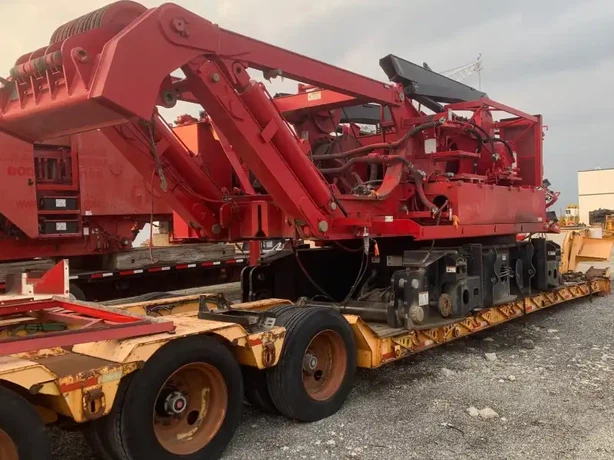
How do you move cranes from a completed job site? The disassembly process follows a careful sequence. First, the boom sections are removed and loaded onto extendable flatbed trailers designed for long loads. Next, the counterweights come off as individual blocks, with each block heavy enough to require its own trailer. The crawler track frames are then detached from the main chassis and loaded separately. Finally, the upper carriage-which contains the cab, engine, and winches-becomes the heaviest single load, often requiring multi-axle trailers for transport.
Some manufacturers reduce transport needs. Liebherr's LR 1800-1.0 uses a nesting design where boom sections fit inside each other like Russian dolls, requiring five fewer trucks than conventional designs.
Step 2: Select Appropriate Trailers
Once the crawler crane is disassembled, selecting the right transport equipment is critical. Different types of trailers serve specific purposes based on component weight and dimensions:
Lowboy trailers are ideal for the upper carriage and other heavy components, as their low deck height improves stability during transit and lowers the center of gravity.
RGN (Removable Gooseneck) trailers excel with medium crawler components, featuring a tilting platform that enables drive-on loading-eliminating the need for auxiliary lifting equipment.
Extendable flatbed trailers are best suited for boom sections and long structural parts, with adjustable length to accommodate various sizes while maintaining proper load support.
Multi-axle platform trailers handle extremely heavy counterweights by distributing weight across many axles, ensuring compliance with road weight regulations and preventing pavement damage.
Step 3: Proper Load Securement
Safe transport requires answering how to move cranes without shifting during transit:
| Requirement | Specification |
|---|---|
| Chains | Grade 100 alloy rated for component weight |
| Binders | Proper tension-not over-tightened |
| Inspections | At departure, fuel stops, and after hard braking |
| Edge protection | Where chains contact sharp metal surfaces |
| Tie-down points | Multiple per component, meeting DOT specs |
Each component needs multiple tie-down points. Failure to secure risks, fines, delays, and accidents properly.
Step 4: Obtain Permits
How to transport a crane legally requires understanding dimensional limits:
| Dimension | Standard Limit | Crawler Component |
|---|---|---|
| Width | 2.5 meters (8.5 feet) | Often 3-4 meters |
| Height | 3.8 meters (12.5 feet) | Often 4+ meters |
| Length | 12 meters (40 feet) | Boom sections up to 30 meters |
| Weight | 20 tons (typical axle limit) | Components up to 100+ tons |
Crawler crane components exceed these limits, requiring oversize/overweight permits for every jurisdiction crossed. Permits need load dimensions, weights, route details, and insurance proof. Processing takes 3-10 business days per state.
Most transports require escort vehicles-front and rear for wide loads, sometimes police escorts for extreme dimensions.
